Back
Tira
tira.financeReact NativeExpo SDK 58SwiftUIJetpack Compose
Tira is a self-custodial crypto wallet, an end-to-end encrypted messenger, and an AI-agent platform in a single mobile app. It manages assets across twelve networks, handles encrypted chat and calls, and lets you delegate on-chain tasks to AI agents that operate their own budgeted wallets. The app itself is a thin signer: keys never leave the device, while backend services handle the reads, quotes, and routing.
Wallet
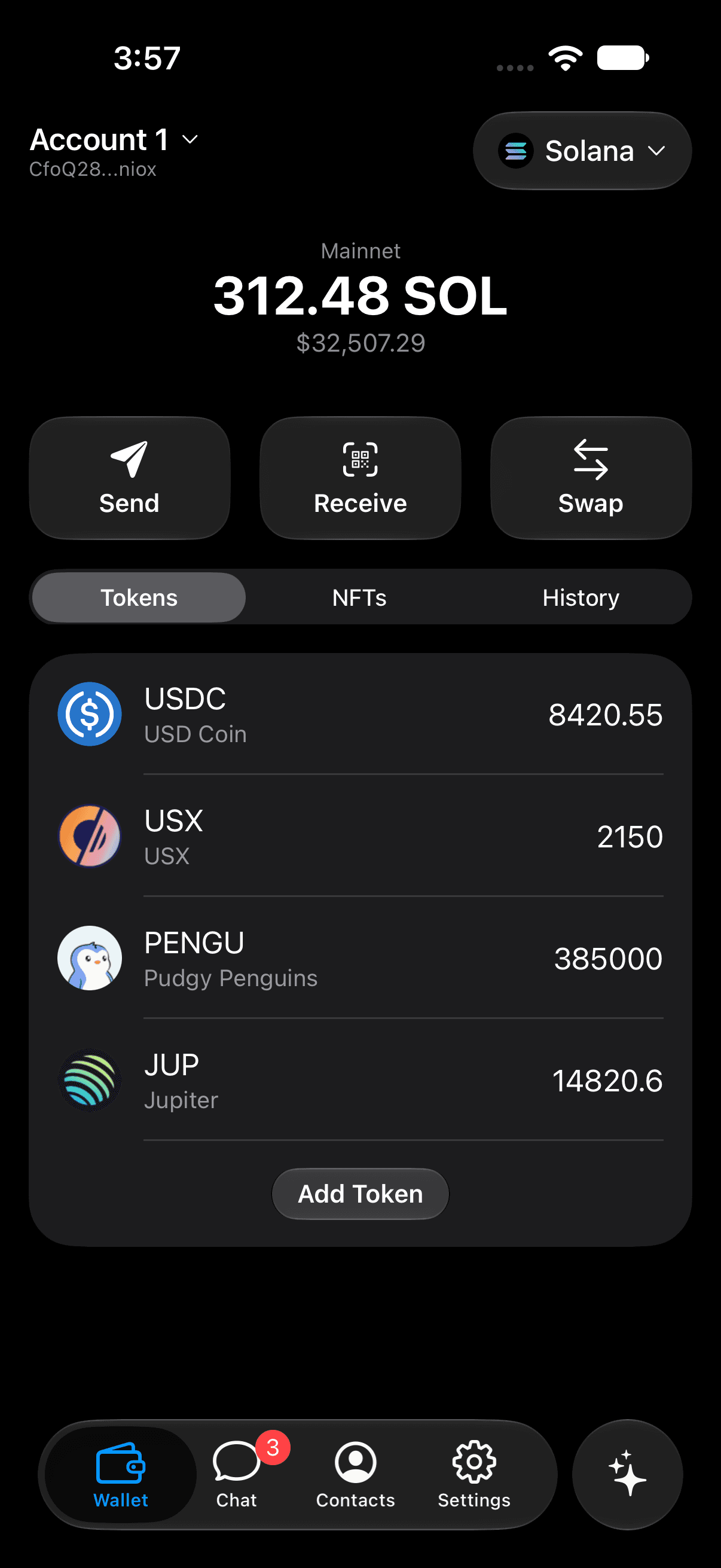
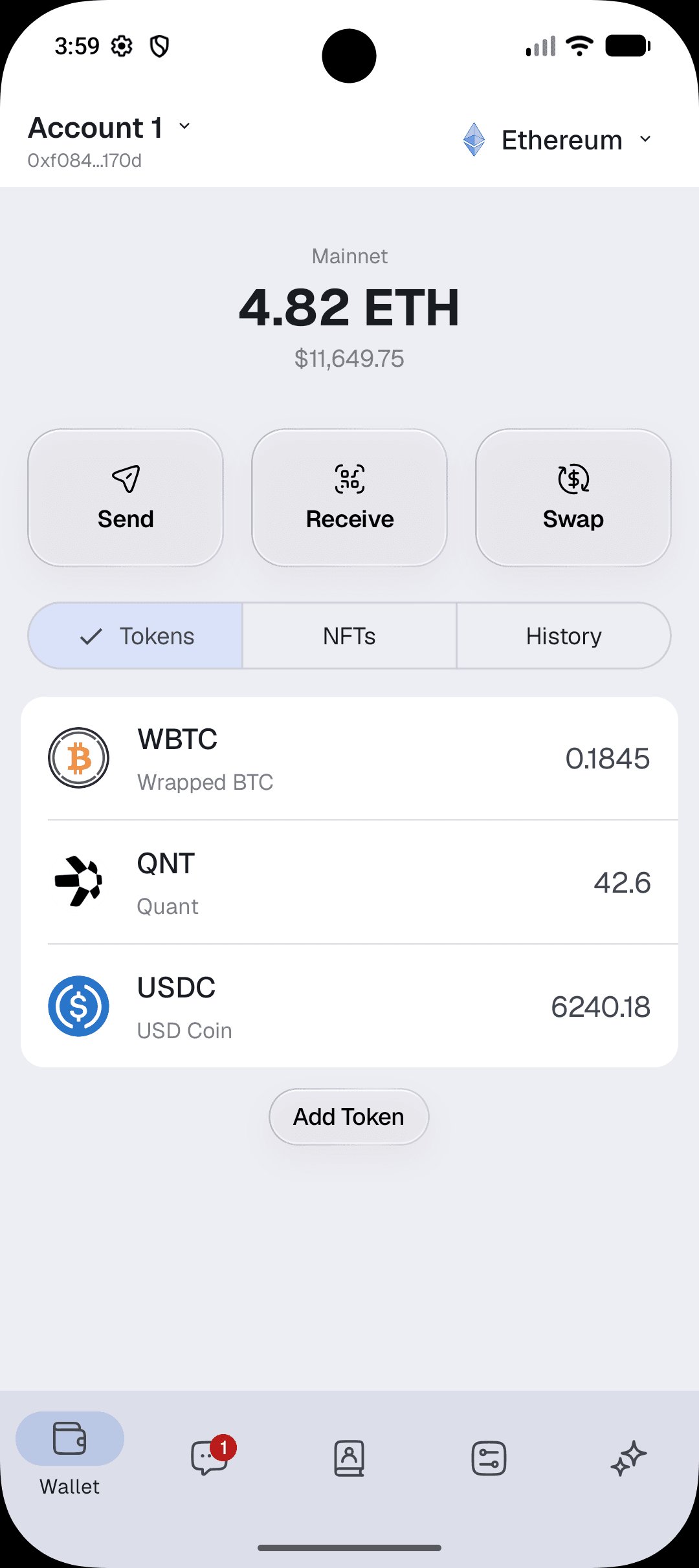
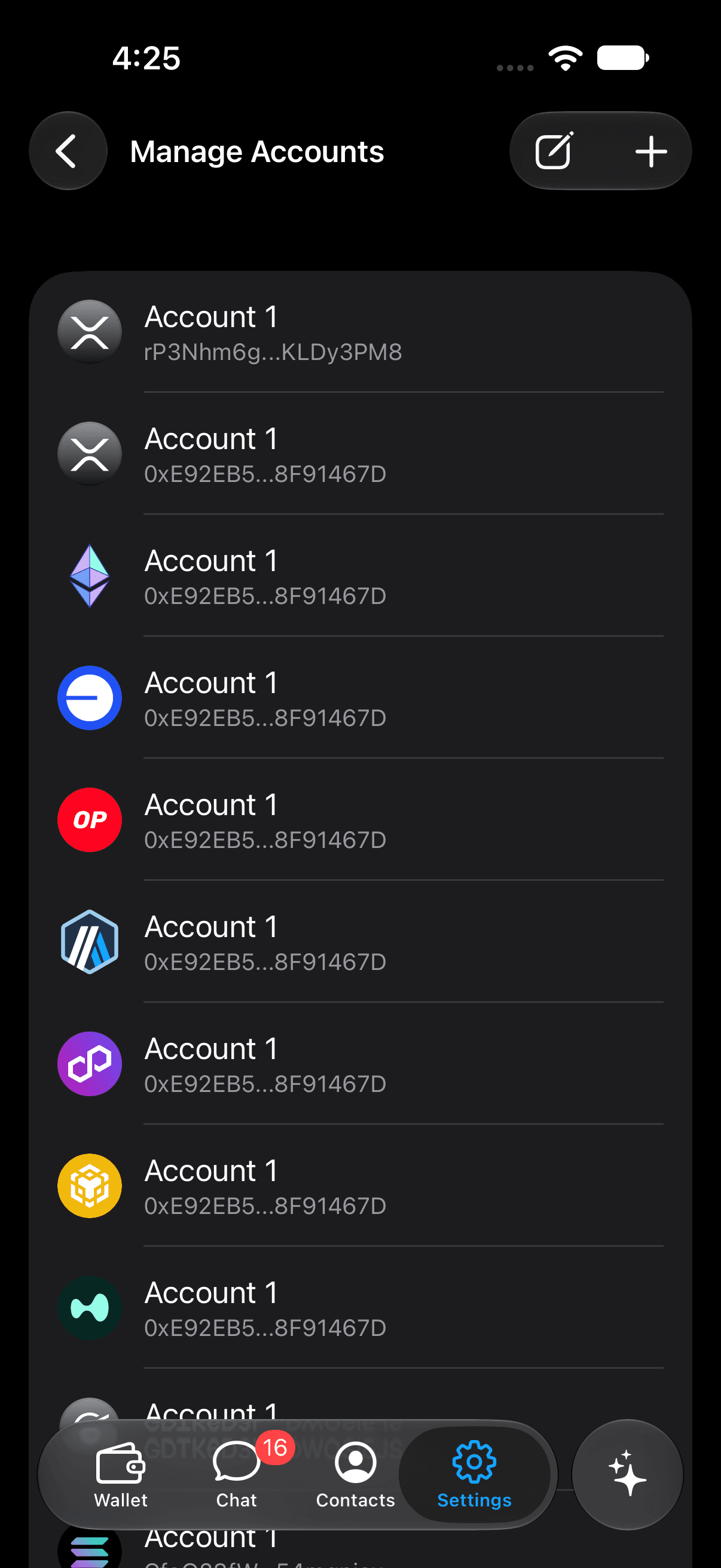
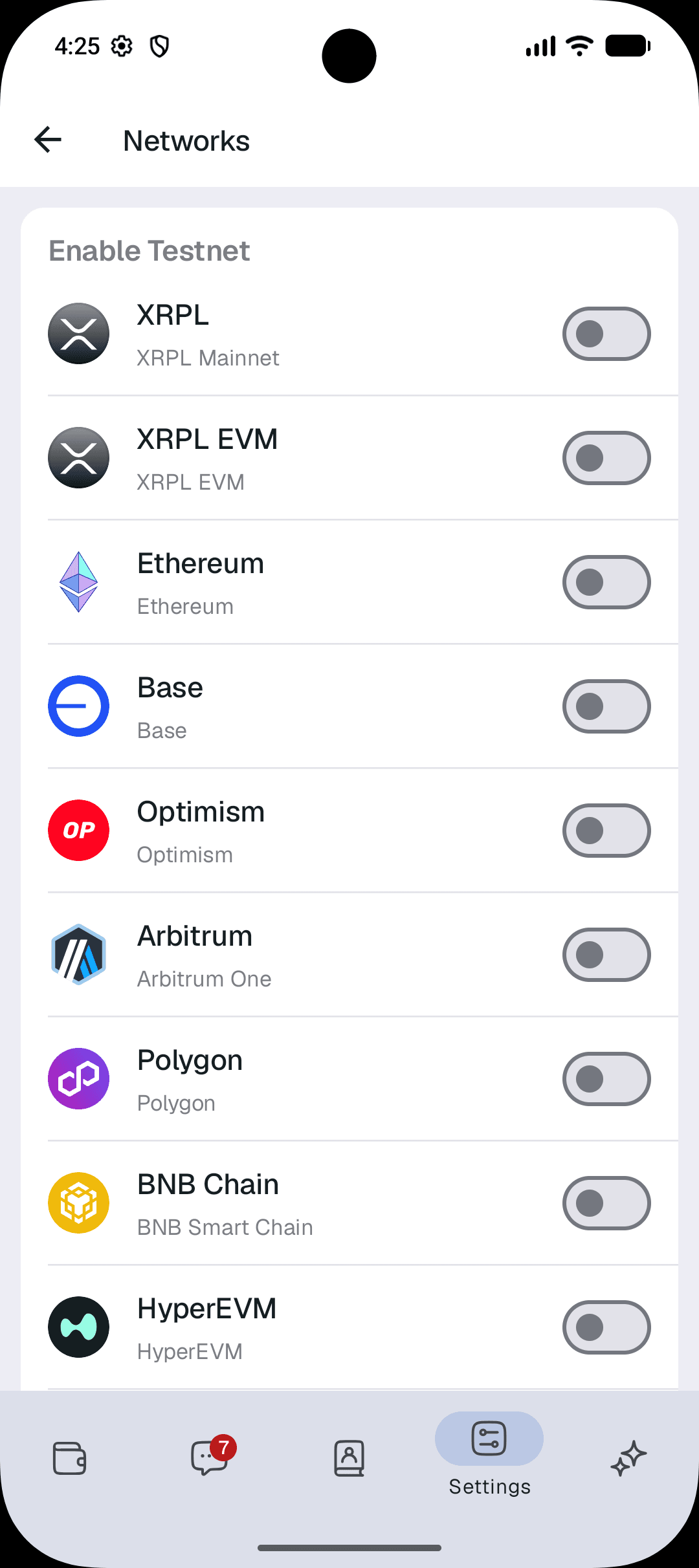
- One BIP-39 seed drives accounts on twelve networks: Bitcoin, Solana, Stellar, XRPL, and EVM chains including Ethereum, Base, Arbitrum, Optimism, Polygon, BNB Chain, HyperEVM, and XRPL EVM
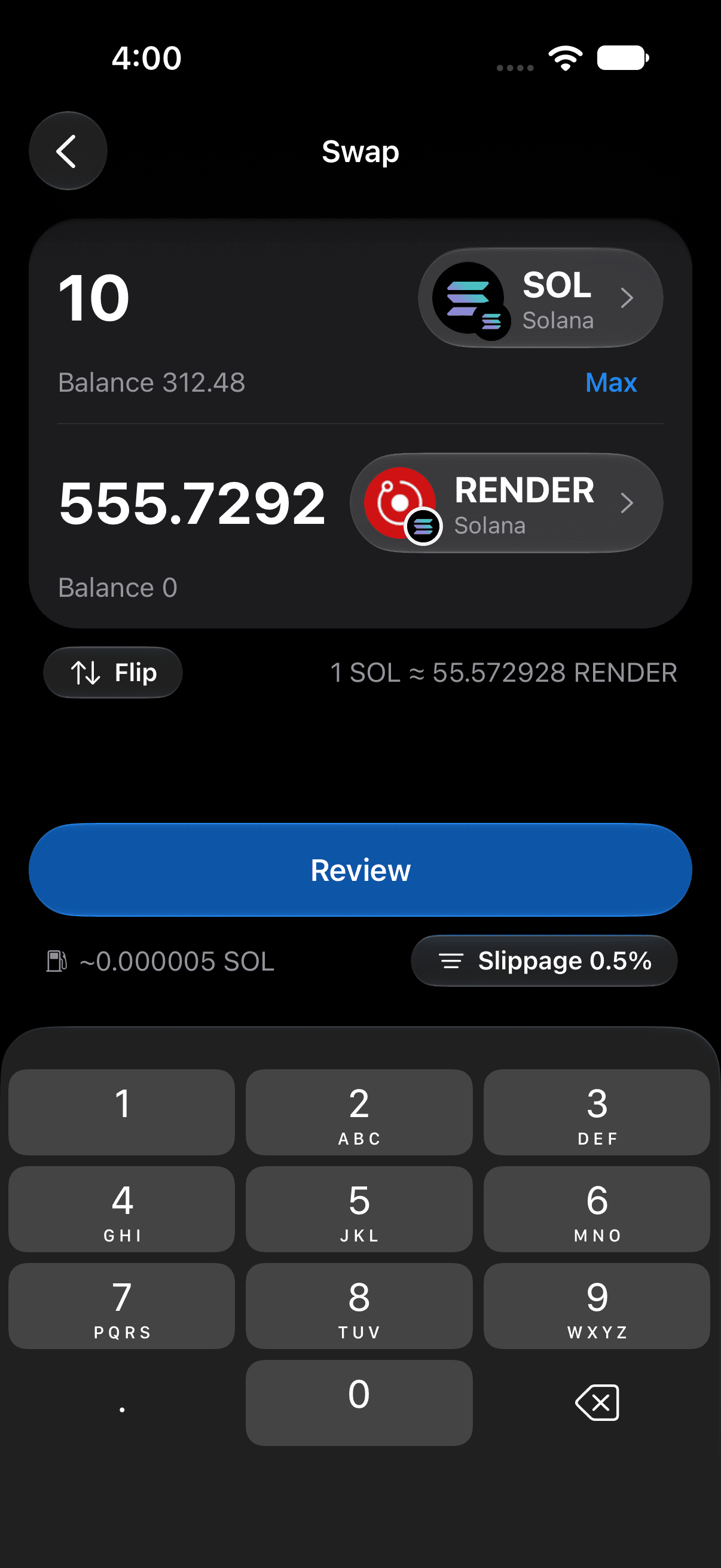
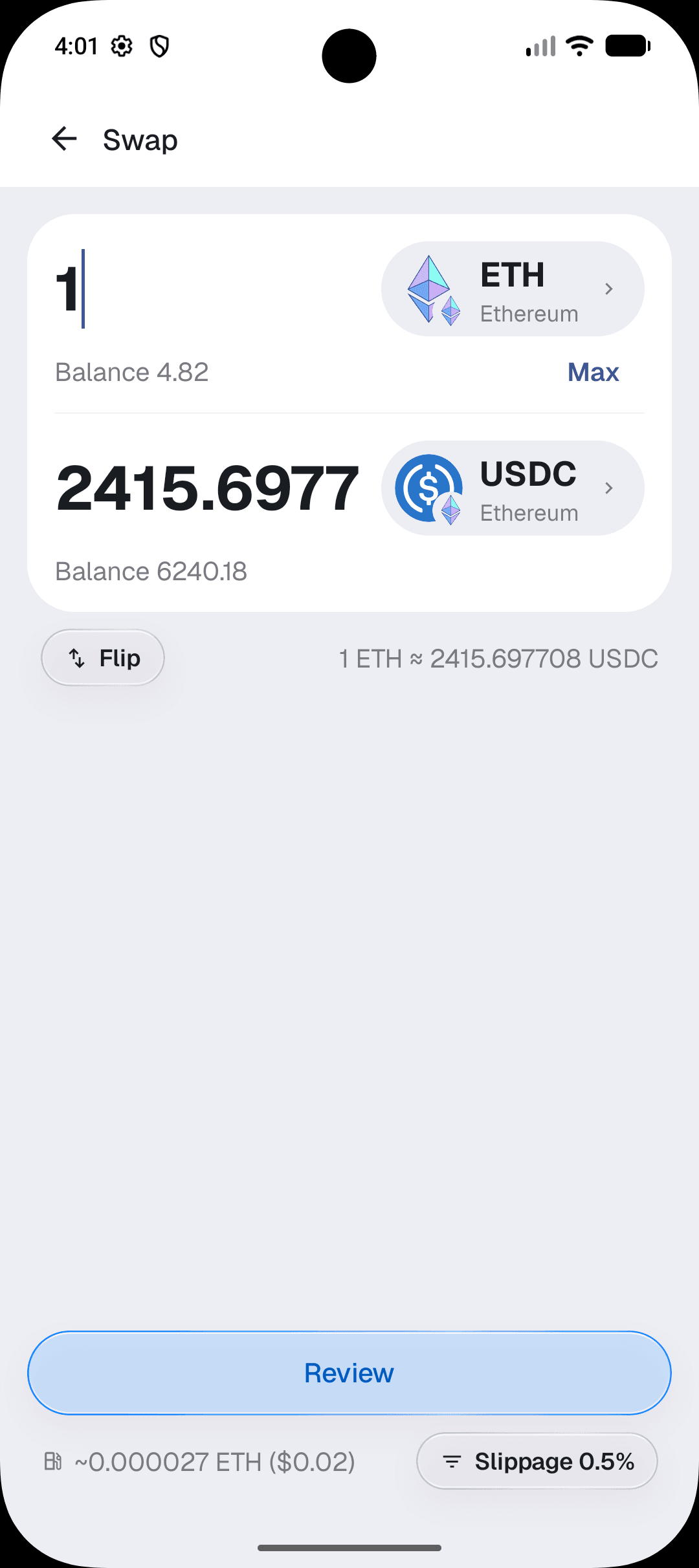
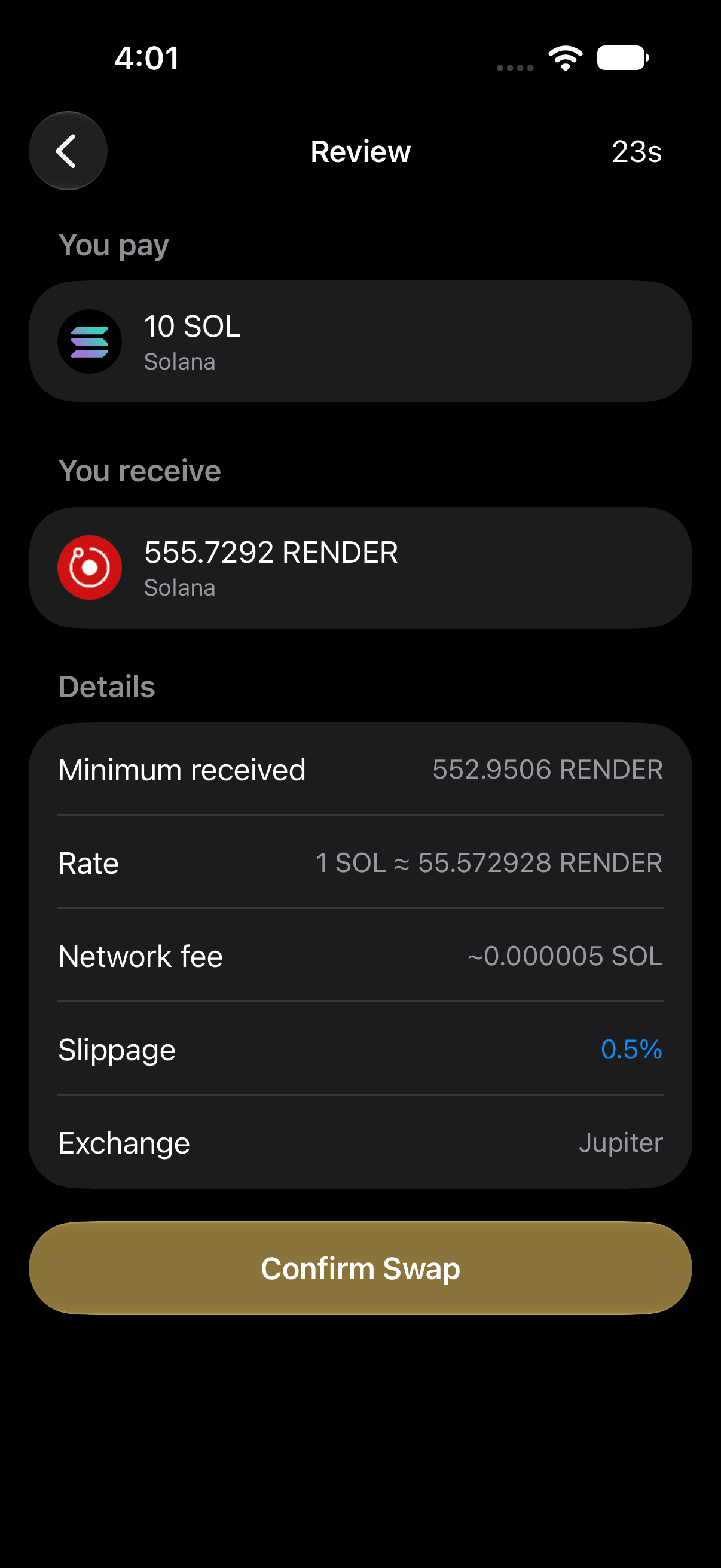
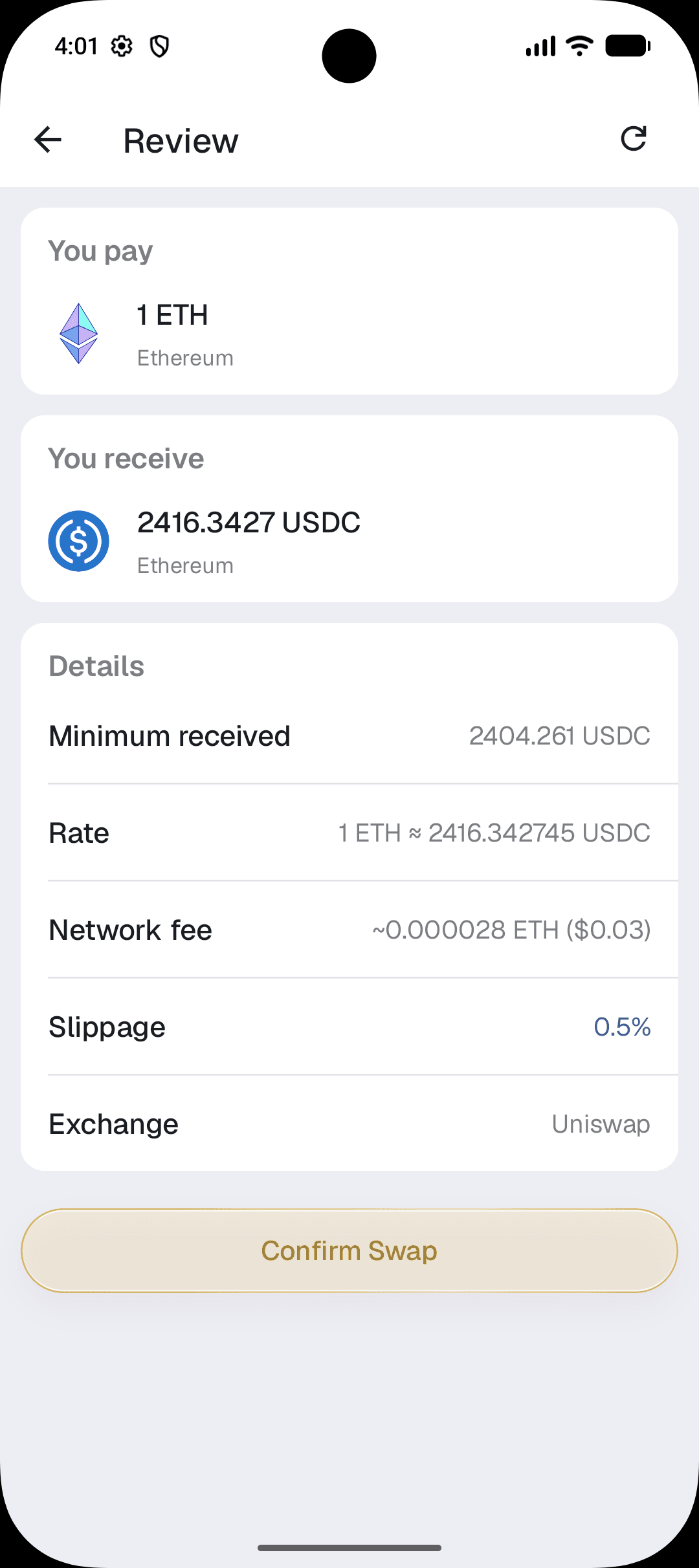
- Send, receive, and swap, on one chain or across chains, with a review screen that shows minimum received, rate, network fee, and slippage before anything is signed
- Accounts can also be imported from a private key; every account signs with its own key, and the signer refuses any key whose address does not match the account
- Only the mnemonic and imported keys are stored, in device secure storage; seed keys are re-derived per signature and never persisted
Messaging
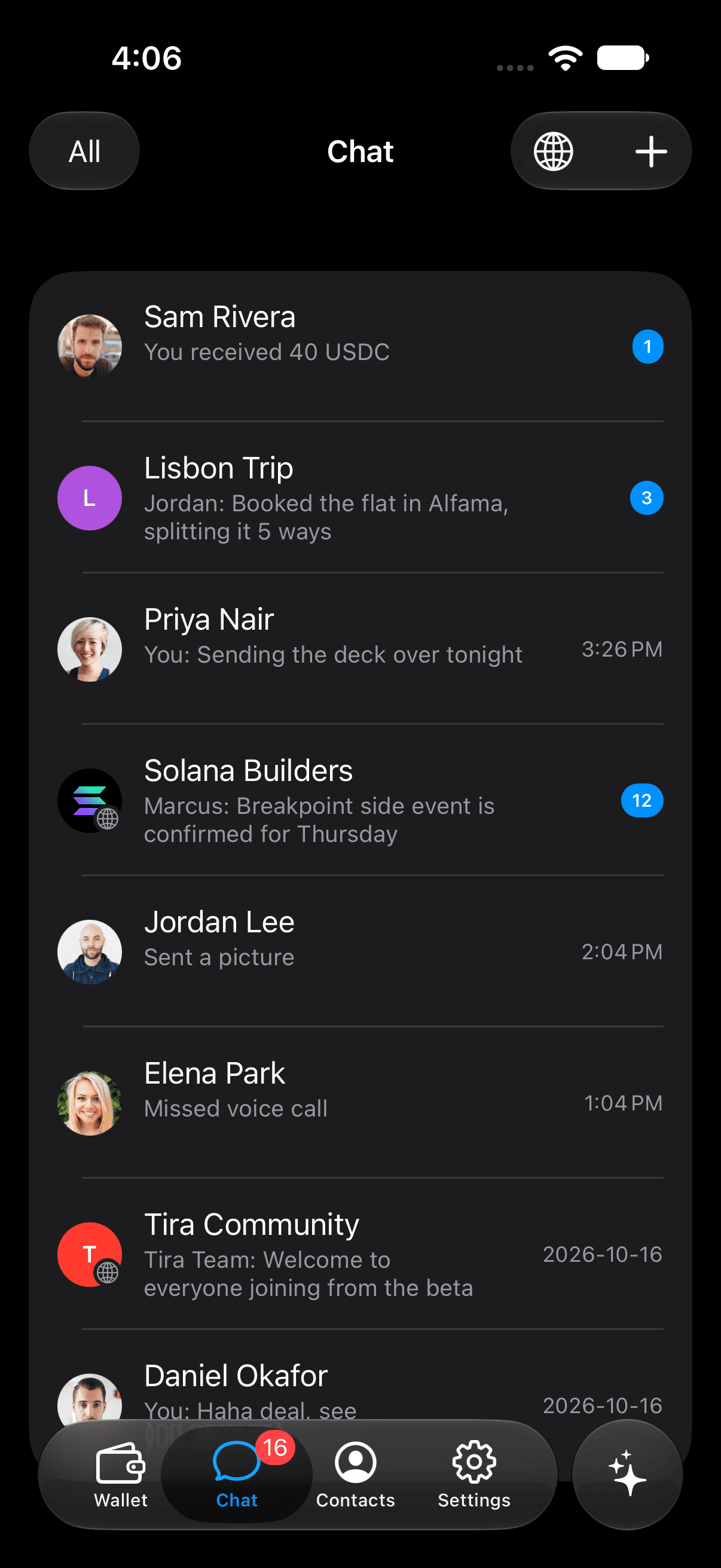
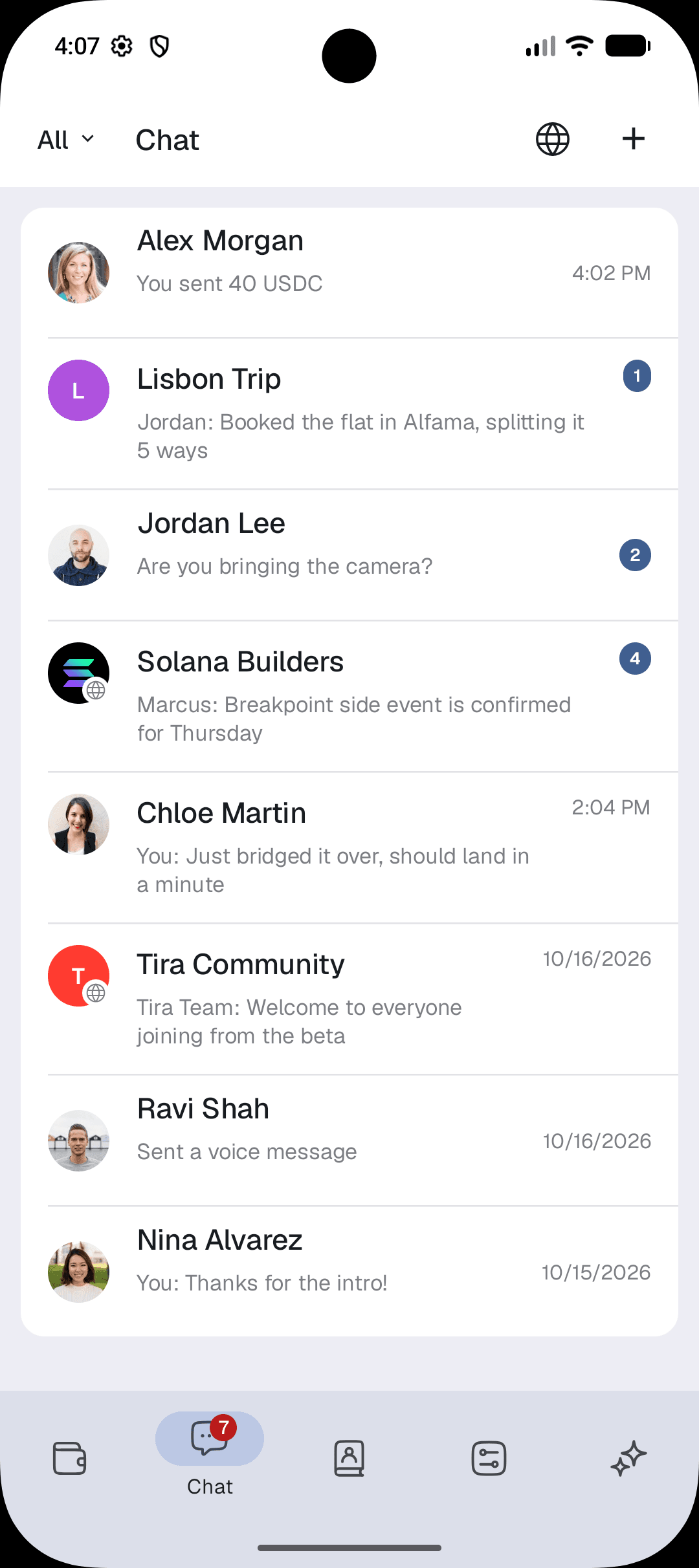
- Encrypted 1:1 and group chat over XMPP on a customized Prosody server, with E2E encryption designed to survive a seed-phrase restore
- Voice and video calls over WebRTC, plus group voice calls, ringing through CallKit on iOS and push on both platforms
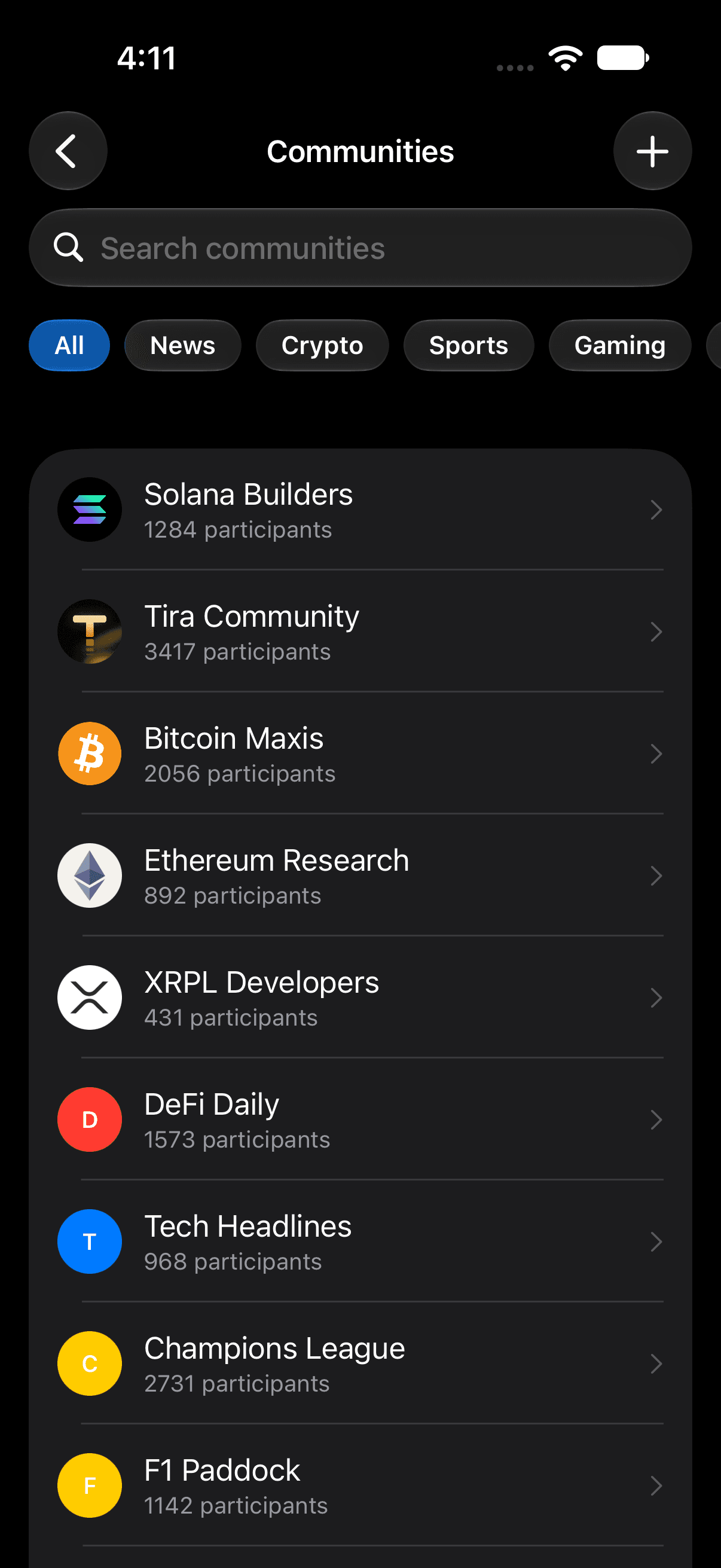
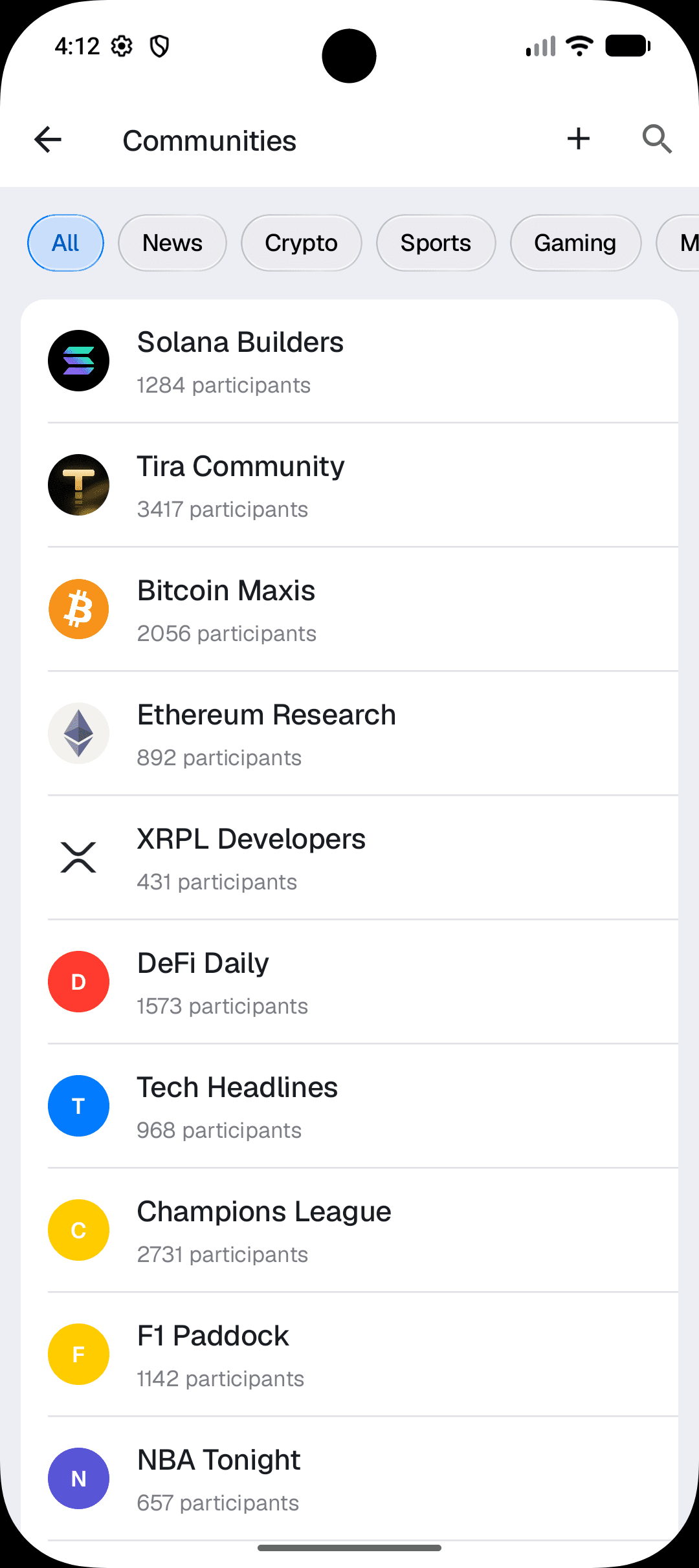
- Communities: a public directory of groups by category with live participant counts, plus moderators, pinned messages, group pictures, and disappearing messages
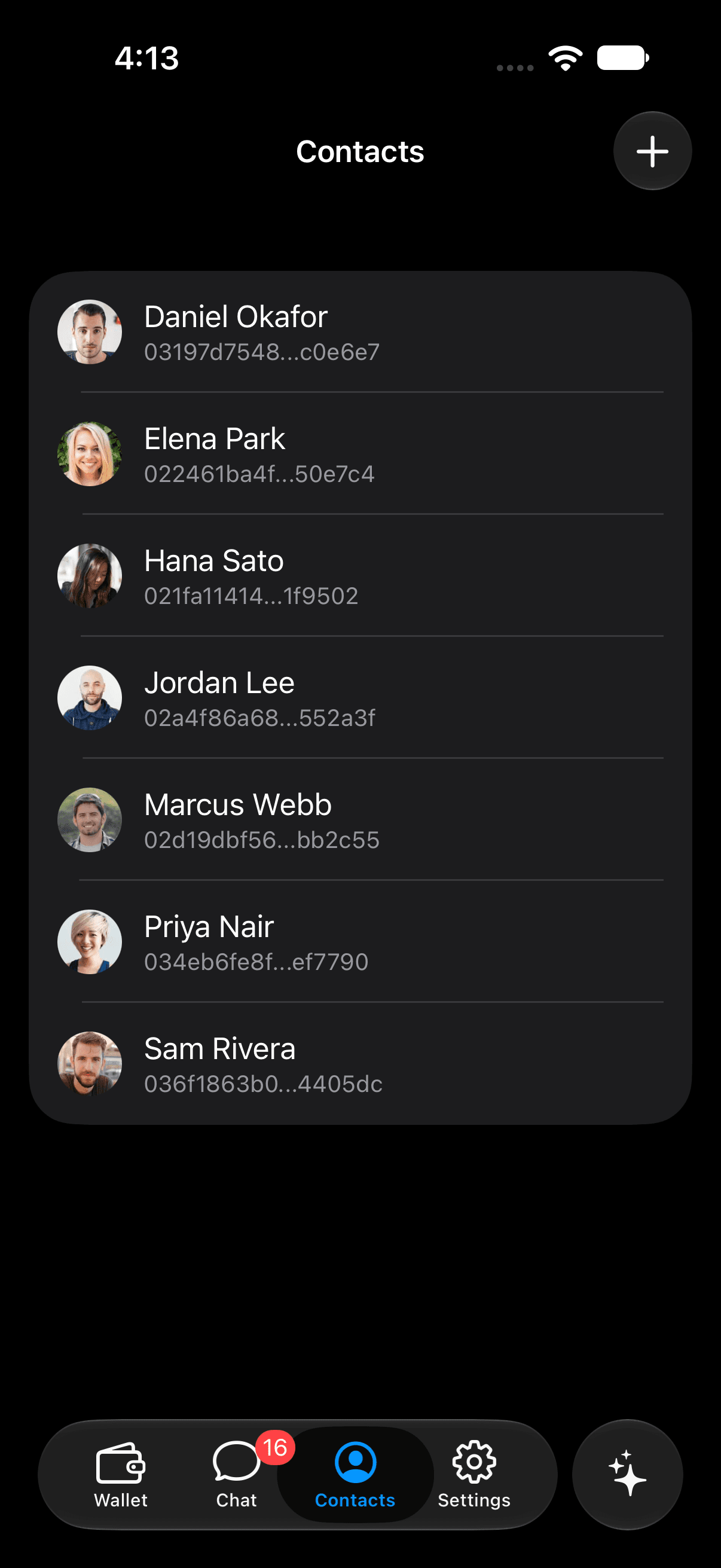
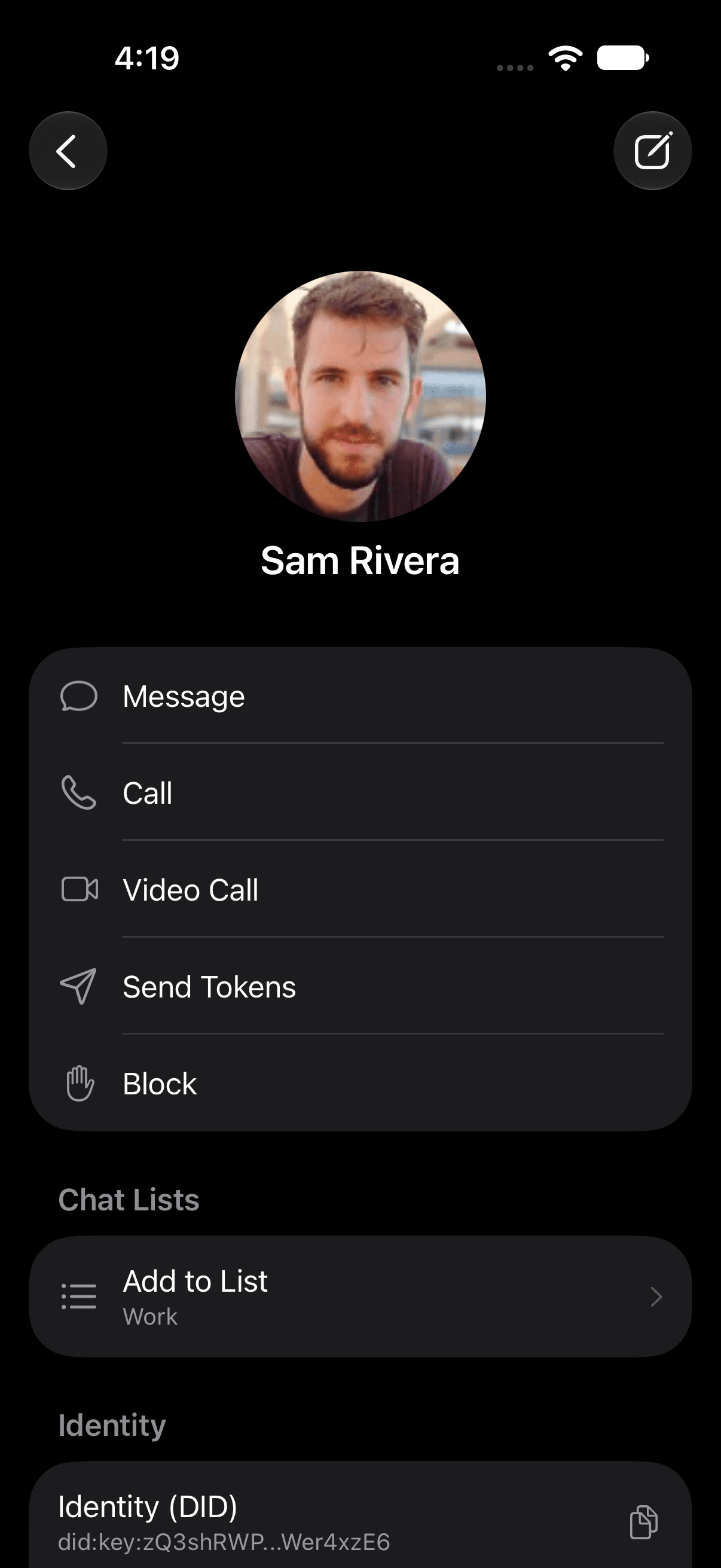
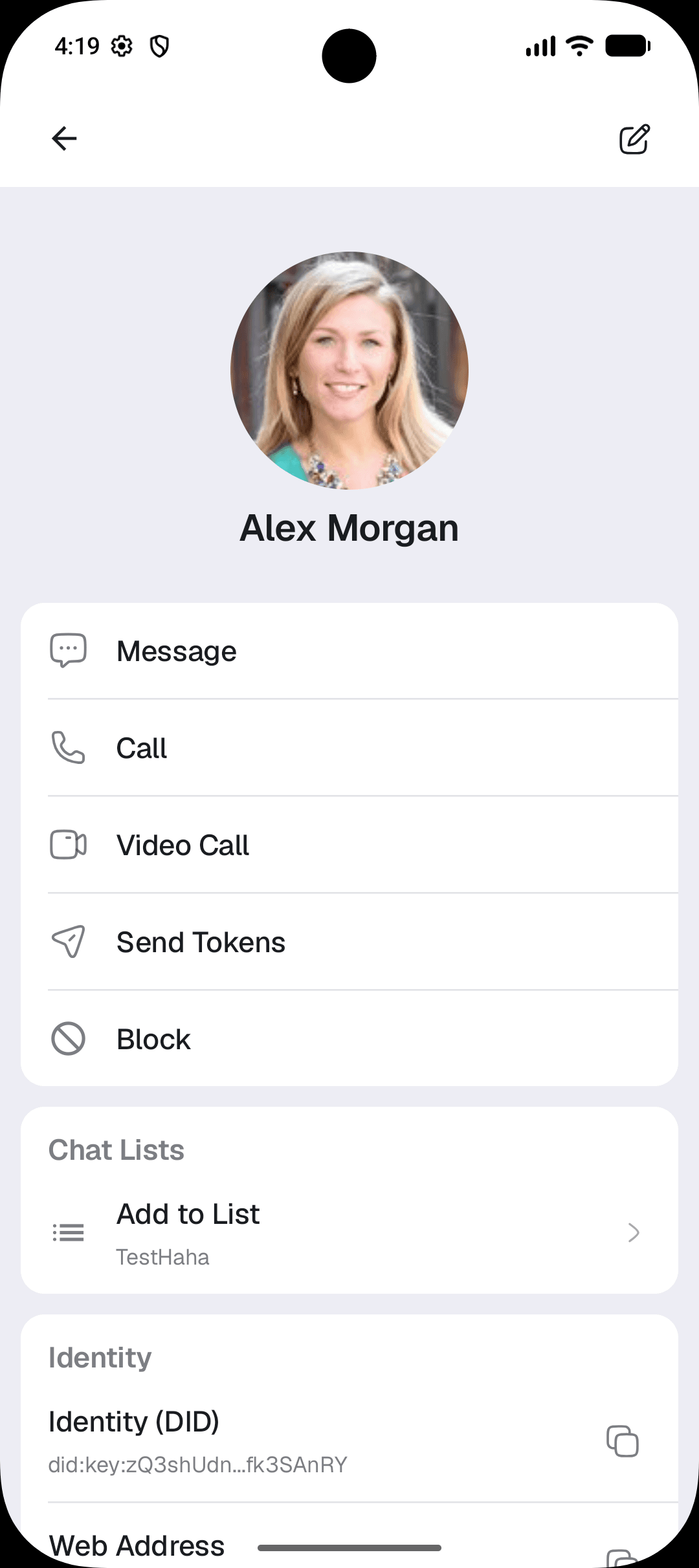
- Payments live in the conversation: send tokens to a contact and the transfer shows up in both threads
- Identity is wallet-native: DIDs derived from your keys and login via signed verifiable presentations, no passwords anywhere
Agents
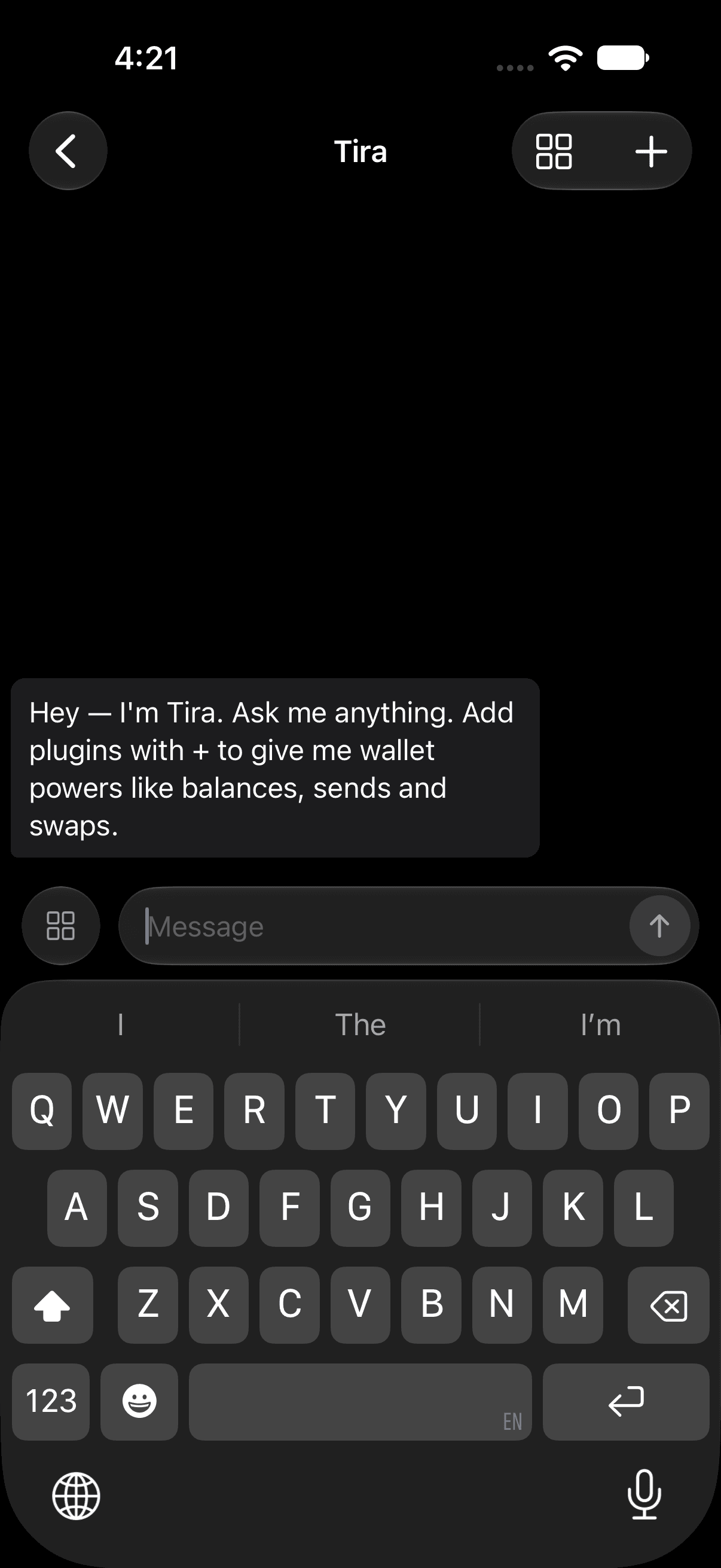
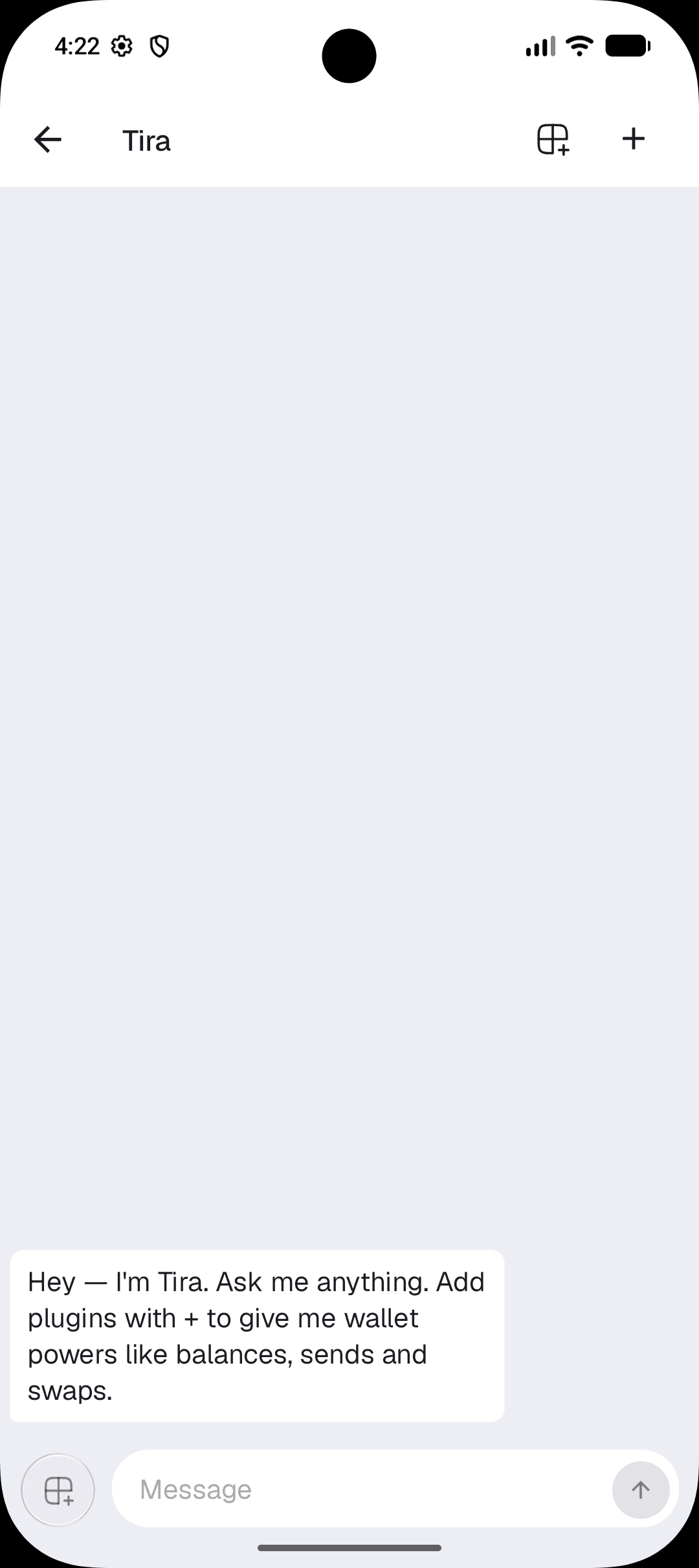
- One agent room: ask Tira anything, and add plugins to give it wallet powers like balances, sends, and swaps
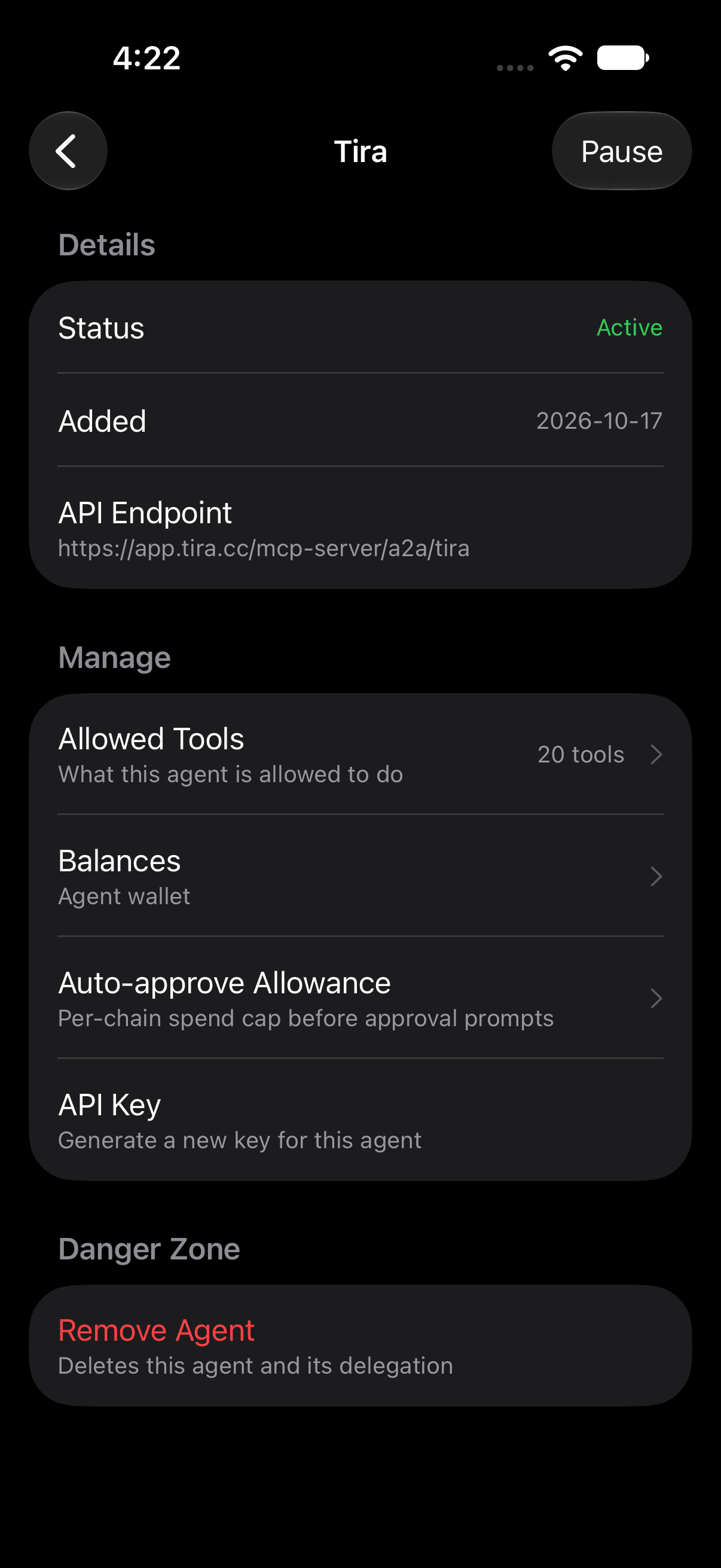
- Delegated agents receive their own wallets, derived from your seed at reserved indexes so funds are always recoverable
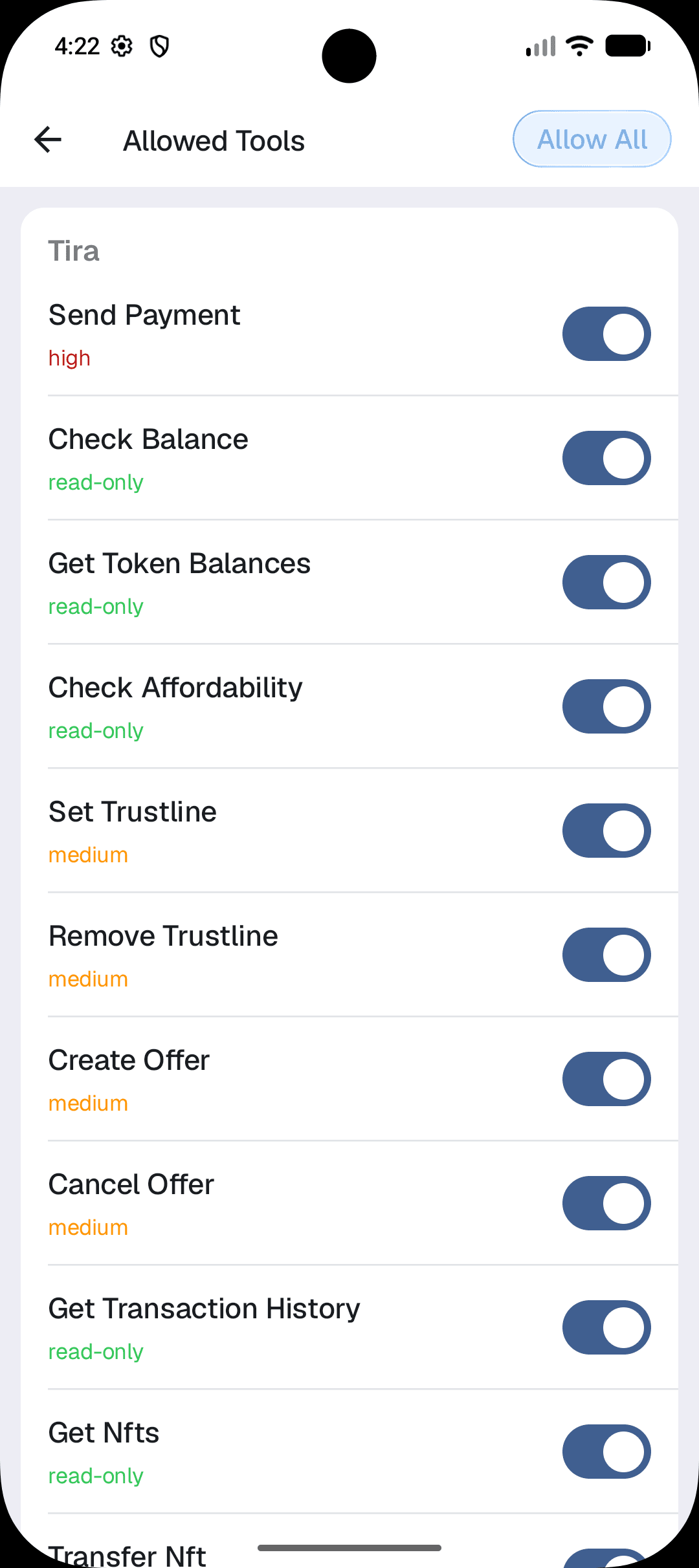
- Each tool is allowed or blocked per agent and labelled by risk, and a per-chain auto-approve allowance caps what an agent spends before it has to ask
- Agents interoperate with third-party agents over A2A, including machine-to-machine payments via x402, and their responses render as native UI cards rather than chat text
Identity & accounts
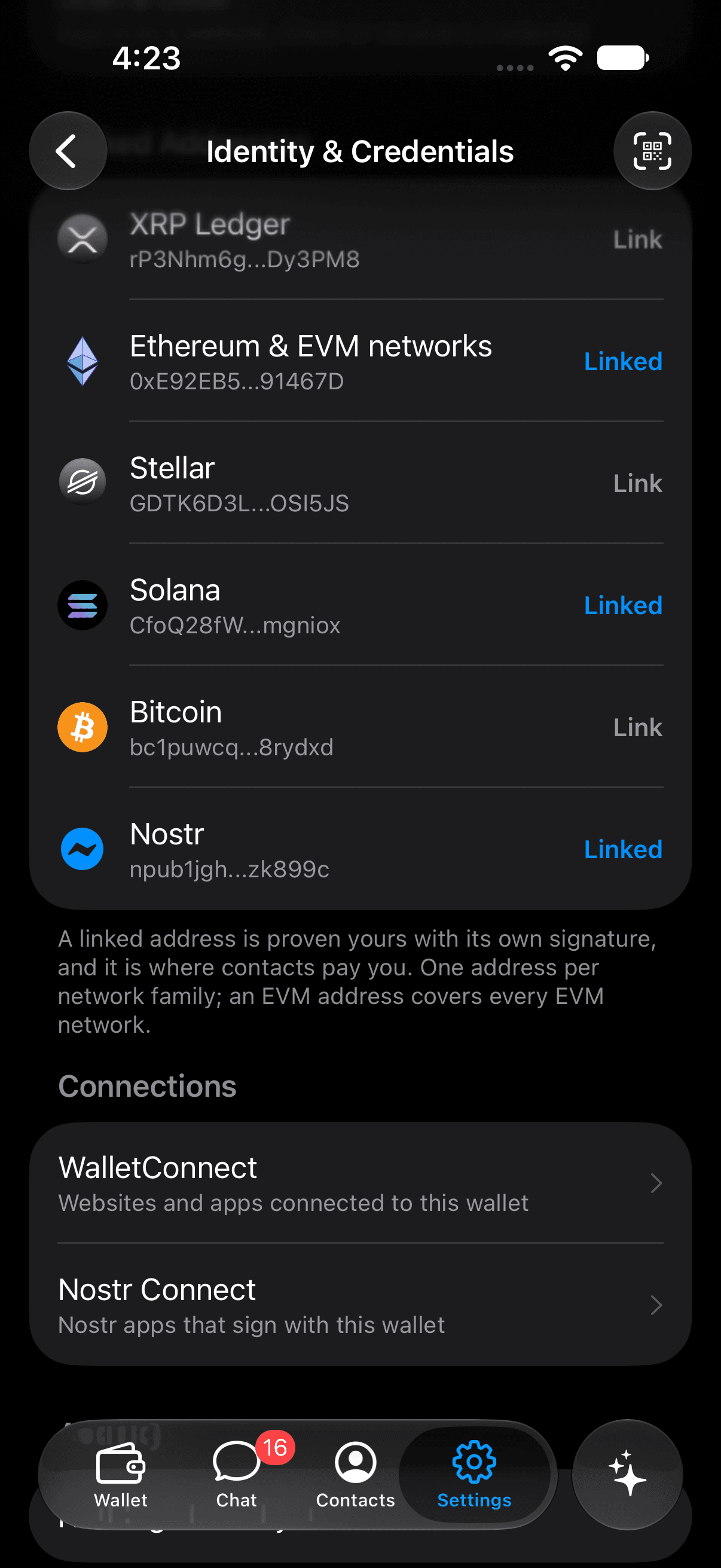
- Link one address per network family to your identity, each proven with its own signature, so contacts know where to pay you
- WalletConnect for websites and Nostr Connect for Nostr apps, both signing with this wallet
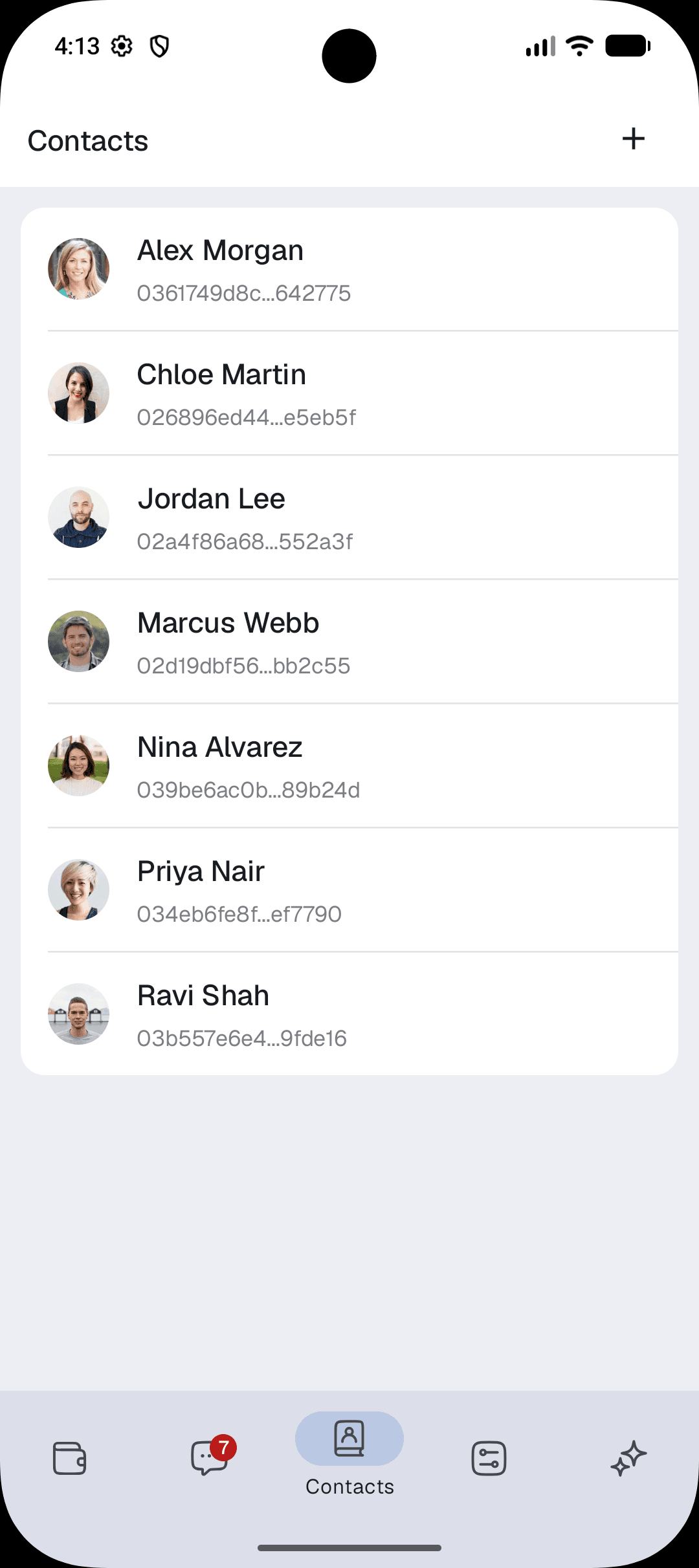
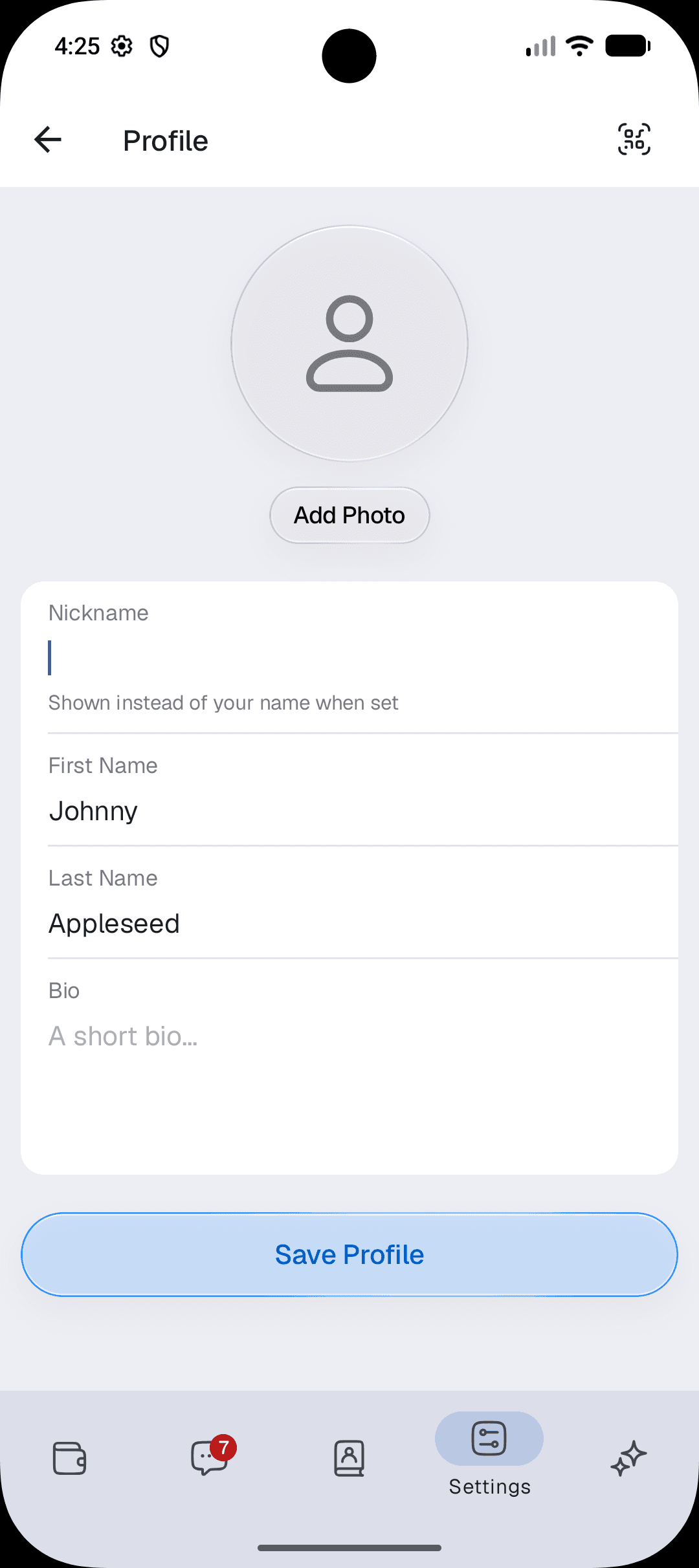
- A profile with a picture and name that contacts see, and accounts you can add, rename, and reorder on every network
Under the hood
- Expo SDK 58 / React Native with the New Architecture and React Compiler; screens are truly native, SwiftUI on iOS and Jetpack Compose on Android, with custom Swift and Kotlin modules where the stock components fall short
- Each platform looks like itself: system colors and Liquid Glass on iOS, a Material 3 palette, Geist, and a native glass button on Android
- Offline-first state with TanStack Query persisted to MMKV, typed file-based routing
- A TypeScript, Express, and Postgres backend fronts every chain read, price quote, and swap route, unifying Alchemy, Helius, and Horizon indexers behind one API shape; the app fetches, signs on device, and broadcasts
- Messaging runs on a Prosody XMPP fork with custom Lua modules for wallet-signed auth, offline inbox, group key distribution, and call history, plus a relay that fans push out to APNs, VoIP push, and FCM
- A headless harness runs the app's real chat and call code as phones in Node, against a throwaway copy of the production server
- The agent runtime is LangGraph orchestrating OpenAI models with tool access to the same chain API; payment amounts, addresses, and x402 signing live in deterministic code the model never touches
- Split trust model: backends can read balances and fetch quotes but never hold user keys; the server signs only for explicitly delegated agent wallets